
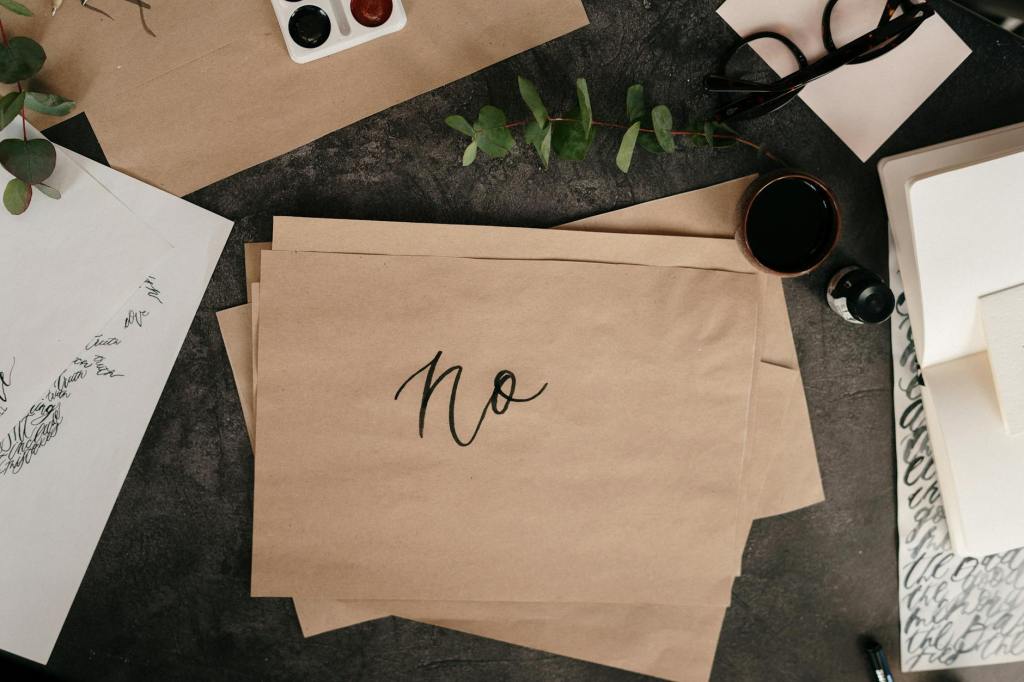
Learning to say “no” is a crucial skill for protecting your peace, privacy, and well-being. Here’s how it can be considered an art:
1. Understand Your Priorities
The first step in saying no is having a clear sense of your priorities, values, and personal boundaries. Knowing what’s important to you helps filter out requests or demands that don’t align with your goals or mental health needs. When you’re firm in your priorities, it becomes easier to say no without guilt because you’re protecting what truly matters.
2. Recognize the Emotional Toll
Saying yes to things you don’t want to do can lead to resentment, exhaustion, and stress. When you say no, you’re prioritizing your emotional and mental well-being. It helps to remind yourself that taking on too much or doing things out of obligation erodes your peace over time. Protecting your emotional energy is a form of self-care.
3. Practice Assertive Communication
Saying no doesn’t mean being rude or dismissive. You can decline requests respectfully and assertively. Phrases like “I’m unable to do that,” “That doesn’t work for me,” or “I have other commitments” set boundaries without feeling confrontational. It’s about being firm but kind, ensuring the other person understands your limits without feeling attacked.
4. Embrace Discomfort
For many people, saying no feels uncomfortable at first because it may disappoint others or make you feel selfish. Learning to sit with that discomfort is key. Over time, you’ll realize that the temporary discomfort of saying no is far outweighed by the long-term peace and freedom it brings.
5. Acknowledge Your Right to Decline
You have the right to say no without justifying or explaining yourself. You don’t need a long explanation to decline a request. Simply stating that something doesn’t work for you is enough. Often, over-explaining or apologizing weakens your boundary and leaves room for negotiation or guilt.
6. Set Boundaries and Stick to Them
Saying no becomes easier when you establish firm boundaries in all aspects of your life—whether it’s work, relationships, or social commitments. By regularly enforcing these boundaries, people begin to respect your time and space. When you consistently uphold them, you build trust in yourself and confidence that your peace is protected.
7. Reclaim Your Time
Saying no allows you to reclaim time for yourself, giving you the freedom to rest, recharge, and focus on things that matter most. In protecting your well-being, you give yourself space to breathe, pursue personal growth, and enjoy life without constant external demands.
8. Celebrate Self-Respect
Each time you say no to something that threatens your peace, you’re saying yes to yourself. It’s an act of self-respect and self-love. When you place value on your own well-being, you empower yourself to make decisions that align with your needs rather than sacrificing yourself to please others.
Ultimately, the art of saying no involves knowing your worth, standing firm in your values, and recognizing that your peace and well-being are non-negotiable. It’s a skill that strengthens your relationship with yourself and teaches others how to respect you as well.
 My Voice Unchained