
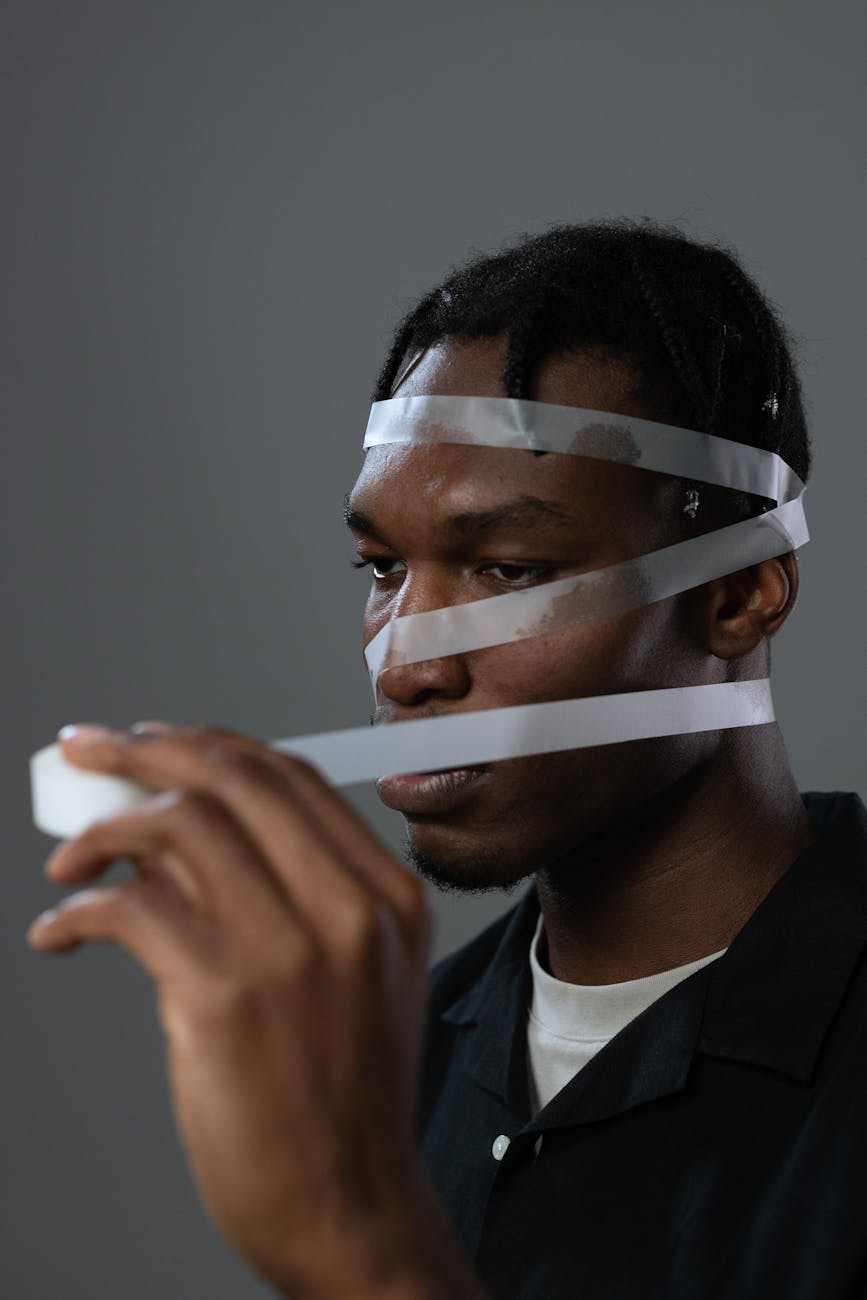
Masking
Masking is the act of suppressing parts of ourselves to “blend in” or meet social expectations. Masking is something many people do, but for those on the autism spectrum, it can be a daily survival strategy. Even those who aren’t neurodivergent often find themselves masking at work or in social settings, especially in high-pressure environments.
The impact? Fatigue. The fatigue is not just physical tiredness, but a deep emotional and mental exhaustion. Masking requires constant self-monitoring. Masking is choosing words carefully, managing tone of voice, rehearsing expressions, remembering to make eye contact, and hiding signs of stress or discomfort. By the end of the day, it can feel like you’ve run a marathon in silence.
Over time, this can lead to:
- Burnout: A cycle of exhaustion and withdrawal that can take weeks to recover from.
- Disconnection from self: A sense of losing touch with your authentic self, because so much energy is spent “performing.”
- Heightened anxiety or depression: From carrying the fear of being misunderstood, judged, or “found out.”
Steps Toward Change
While some masking may feel necessary in certain environments, there are ways to lessen the load:
- Find Safe Spaces to Unmask
Whether it’s with a trusted friend, family member, or in an online community, having places where you can fully be yourself helps restore energy and balance. Most of the masking I do takes place at work in a very narcissistically toxic environment. I often unmask by leaving the property during my lunch hour where I am free to unwind without the hardcore monitoring against me. - Micro-Breaks During the Day
Even five minutes alone to gather yourself can help. Micro-breaks such as listening to music, breathing exercises, or simply stepping outside can help reset your nervous system. - Shift the Perspective
Instead of seeing masking as “faking,” reframe it as a skill you use strategically. Then, give yourself explicit permission to drop the mask as soon as you’re in a safe space. In fact, I never call my mask faking who I am. Essentially, I am protecting myself against the targeting I experience. If I allowed myself to truly unmask, I’d face the risk of losing my job. On more than one occasion, I’ve fought within myself not to lose my cool and say some heart-shattering words to some people who I felt would have deserved it, but then I’d be no different that ones targeting me for bullying. - Build Small Authentic Moments at Work
Share a hobby, a personal quirk, or a genuine reaction where it feels safe to do so. These glimpses of authenticity can lighten the burden without putting you at risk. I am usually only able to to this with flying monkeys within the narcissist’s circular group of control who I know are taken through the cycle of the narcissist’s cycle of devaluation and discard or even bringing light to any coworker who I know may be struggling with the loss of a loved one. - Energy Accounting
Treat your energy like a budget. If masking drains you at work, try to balance it with activities that refill you afterward. After a long day of masking, I require copious amounts of quiet time, stimming, creativity, prayer, or exercise. I wouldn’t even call myself a Justin Bieber fan, but I’ve been stimming to a song from his earlier days, called “One Time”. I’ve been listening to it on a loop for days to and from work and can’t help but sing and move to it in the car no matter who’s watching. LOL
Final thought: Masking might feel unavoidable, but survival doesn’t have to mean constant self-erasure. Learning when, where, and how to soften the mask, even just a little, can transform the daily grind into something more bearable, and more authentically yours.
 My Voice Unchained