
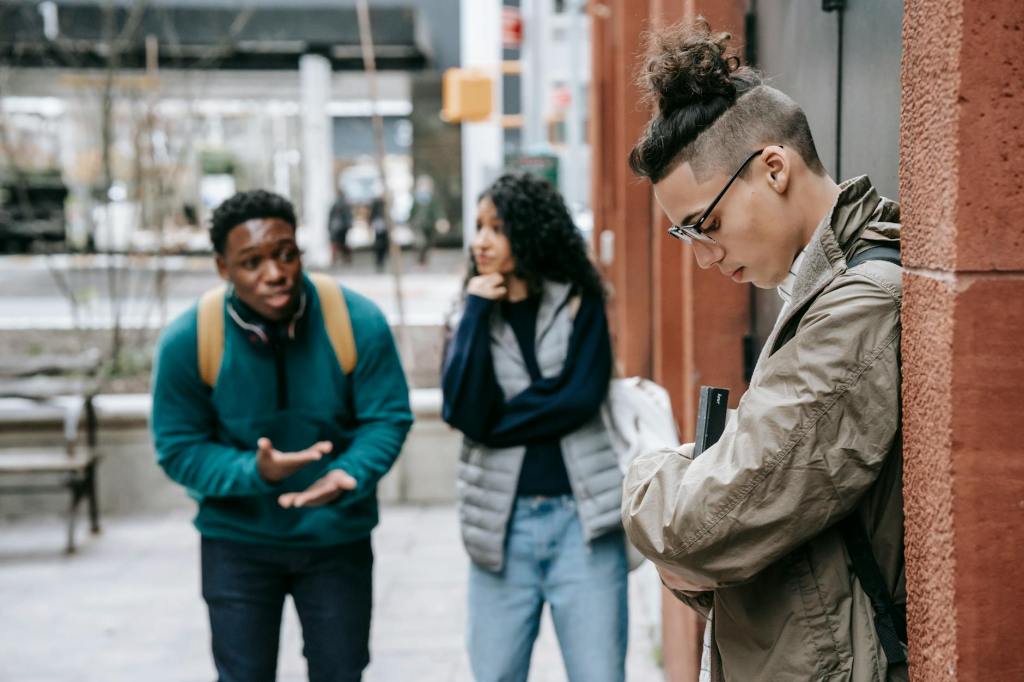
For as long as I can remember, I have annoyed some people for simply existing … for daring to breathe … for smiling … for a host of things that I felt stunted my actual abilities to blend in with people.
For the longest time, I had no idea that some people were annoyed with my autistic traits. When I’m just being who I am but must navigate through someone’s annoyance of my perceived differences, then I have to stop and think about what trait they’ve identified and how I can be less annoying.
To the latter part of that previous sentence, I can’t be less annoying without masking who I truly am as a person. It’s not my problem that some people don’t have an understanding of autism spectrum disorders. It’s also not my problem to change people’s minds about me. We are all unique, whether neurotypical or neurodivergent. We should all be accepted and respected, but in reality, this is not always the case.
I often don’t view myself as autistic until someone brings it up. Then I will realize that the person is picking up on my autistic traits – traits that seem to annoy them in a way that they often cannot verbalize in an articulate way that doesn’t hurt my feelings or that makes them appear as less insensitive than they are at the moment they speak upon my traits.
For instance, one coworker asked me if I’d ever been in the military. When I responded that I had not, the coworker asked me if I was sure I hadn’t mentioned it. Of course, I hadn’t mentioned anything about being in the military because this is not the case, and for a moment, I was clueless as to why the coworker had mentioned this without elaboration.
After further thought about this interaction with the coworker, I realized that the coworker was picking up on my autistic traits. The coworker had remarked about how disciplined I was at my work and how I was so punctual with my breaks – taking the exact amount of time needed for all breaks when a lot of other coworkers took much longer breaks.
Another coworker at a different time would mention this same thing – that my breaks weren’t calculated like everyone else’s. It appeared to this particular coworker that when I took a break that I obviously began my countdown the moment I walked away from my station instead of the moment I arrived to the break room or wherever else a person goes on breaks.
Although it seemed like a normal conversation, I could easily tell that this coworker was annoyed by my behaviors as they were linked to my break times. The coworker found my behaviors “odd” … that I did things that didn’t make sense to them. Although I could tell the coworker was trying to be nice about it, I could also tell that my behaviors have obviously been a topic of discussion based on how the coworker worded what was said to me.
In these situations, I often don’t know what to do. Sometimes I go mute and just listen. I listen to what is said without ever responding because in those moments, I don’t have the words for a response, and anything I might want to say doesn’t seem adequate. I also grow exasperated with these types of discussions. I don’t care to respond to people who don’t seem intent on understanding me, and even if they mean no harm, it’s a fatiguing task to try to make my behaviors make sense to others when my behaviors often don’t make a lot of sense to me.
I was a little disappointed with this coworker’s response towards me because it means that I may have not realized at the point when their friendliness towards me may have changed into pure annoyance with me. Of course, this is not to say that this coworker still isn’t friendly, but I am now a lot more guarded in catching myself behave a certain way that was mentioned to me whenever this or other coworkers are around me.
From experience, I know that some people may be annoyed by certain autistic traits because they don’t understand them or know how to interact with them. Autistic quirks, such as specific interests, repetitive behaviors, or difficulties with social interactions, can sometimes be misunderstood or seen as unusual by others who are not familiar with autism spectrum disorders.
Additionally, some people may have misconceptions about autism and may react negatively to behaviors they perceive as different or strange. This has been the case for me … that some people I’ve encountered – mainly neorotypicals – often react negatively to me because they don’t understand autism, selective mutism, or the fact that people can be unique while being themselves.
 My Voice Unchained
Very nice post.
LikeLiked by 1 person