
There was a time when I believed relationships were supposed to last simply because they had lasted a long time.
I believed history meant something.
I believed loyalty meant staying.
And when a relationship was built around spirituality, faith, and a shared belief in God, I thought that gave it an even stronger foundation. I thought surely that would be enough to hold people together when things became difficult.
Eventually, I learned that it wasn’t.
Faith doesn’t automatically make a relationship healthy. Spirituality doesn’t eliminate dysfunction. Believing in God doesn’t mean people suddenly stop participating in unhealthy patterns.
People are still people.
And sometimes the same patterns that exist in unhealthy relationships outside of religious or spiritual communities can exist inside them too: exclusion, triangulation, smearing, gaslighting, manipulation, blame, control, and the constant shifting of responsibility onto someone else.
That was a painful realization for me.
One of the first times I truly understood this was when I walked away from a long-term friendship that I believed would stand the test of time. I had invested years of my life into that relationship. I had shown up. I had given. I had loved. I had been loyal.
Walking away wasn’t easy.
It wasn’t something I did because I suddenly stopped caring.
I walked away because I eventually understood that caring about someone did not require me to continue participating in a relationship that was hurting me.
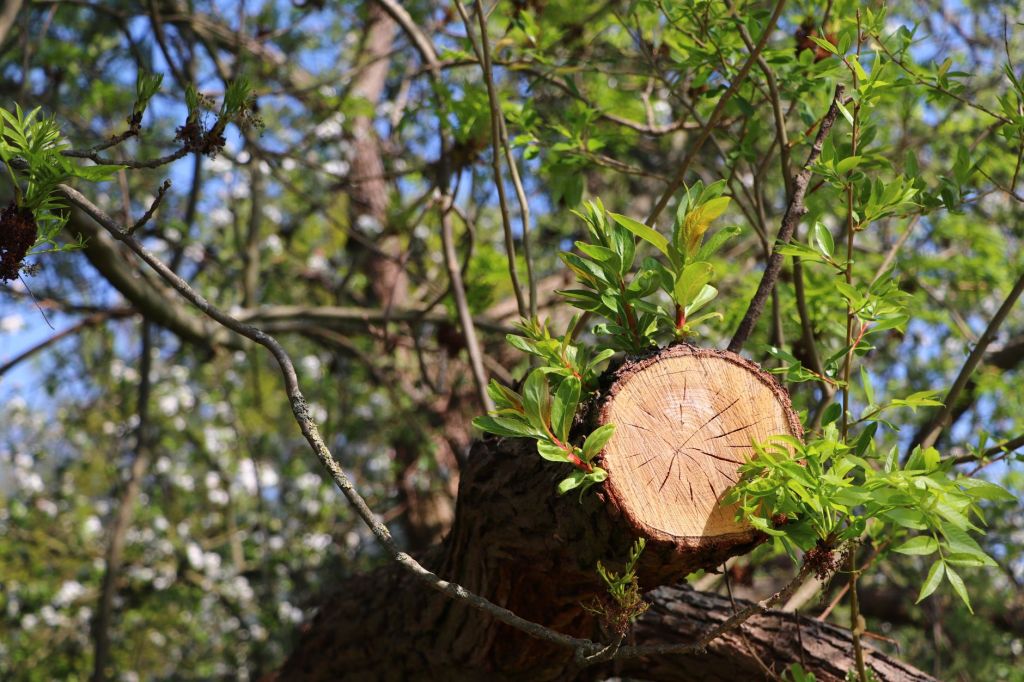
That experience became one of the first branches I cut away from a much larger tree.
Looking back, I realize that I didn’t begin by confronting the roots.
I began with the branches.
Over time, I found myself walking away from different relationships and environments that no longer felt healthy for me. Some were friendships. Some were connections within communities. Some were relationships that I had once believed were permanent.
Each time, I learned a little more about myself. I learned that I could leave. I learned that I could survive losing people. I learned that I didn’t have to convince someone that they had hurt me before I was allowed to step away. And most importantly, I learned that I couldn’t change another person’s system. That realization eventually became important when I reached the relationships that were closest to the roots. Because when you’re dealing with an entire relational system, changing one person doesn’t necessarily change the system.
You can explain yourself. You can communicate. You can forgive. You can try harder. You can become more patient. You can become quieter. You can become more understanding. You can change yourself in a hundred different ways trying to find the version of yourself that will finally make the relationship work. But eventually, there comes a point when you have to ask yourself: What if the only think I can actually change is my participation in the system?
That’s when the tree metaphor became clear to me. Sometimes you can’t tear down the tree. You can’t get to the roots. You can’t change the soil. You can’t make the roots grow differently. You can’t force the branches to produce different fruit. And sometimes trying to destroy the entire root system would require you to become consumed by the very thing you’re trying to escape.
So instead, you remove yourself. You detach. You stop participating. You step away from the shade of the tree. And that is what I eventually did.
I had spent years trying to understand what I needed to do differently to make certain relationships work. Eventually, I realized that the answer wasn’t always to try harder. Sometimes the answer was to stop trying to make something work that was never within my control to fix. There was grief in that realization.
There is always grief when you walk away from people you once loved. You don’t just lose the person. You lose the version of your life that existed around that person. You lose routines. You lose memories. You lose expectations. You lose the future you imagined. And sometimes you lose an entire network of relationships because one relationship was connected to all the others. That was another lesson I learned: Sometimes when you lose one person, you realize you were connected to an entire system.
Walking away from one relationship can expose how many other relationships were dependent upon your remaining connected to that system. And suddenly, what started as one separation becomes several.
At first, that can feel like everything is falling apart. Eventually, you may realize that everything wasn’t falling apart. You were separating. There is a difference.
I don’t believe every person who enters our lives is necessarily there only to teach us a lesson. Some people genuinely matter to us. Some relationships are real. Some memories are beautiful. Some love was genuine, even if the relationship eventually became unhealthy.
But I do believe that people can belong to different chapters of our lives. And sometimes a chapter ends long before we are emotionally ready to admit that it has ended.
I’ve had to learn that walking away doesn’t mean the relationship meant nothing. It means that what the relationship had become could no longer continue. I can acknowledge what I gave without regretting that I gave it. I can acknowledge that I loved people without needing them back in my life. I can remember people without reopening the door. And I can accept that there are people who once knew me intimately who are now essentially strangers. People I used to know in a different life. That doesn’t make me bitter. It makes me aware.
Every time I removed myself from another unhealthy branch, I learned something about the tree. And eventually, I learned something about myself. I didn’t need to destroy the tree. I didn’t need to change the people attached to it. I didn’t need to convince them to see things the way I saw them. I didn’t need them to validate my decision. I needed to remove myself. That was the part I could control. And perhaps that’s one of the hardest lessons in walking away from dysfunction: You cannot always change the system you were born into, the system you joined, or the system you became attached to. Sometimes the only system you can change is yourself.
So I did.
I began removing myself from trees that were never mine to prune. And eventually, I found myself standing outside of the shade, looking back at everything I had once considered permanent. It was painful. But I was free.
And I realized something I hadn’t understood before. Sometimes choosing yourself doesn’t mean you stopped loving other people. Sometimes choosing yourself is what finally happens when you realize that loving other people should never require you to abandon yourself.

